
Choosing where to pursue your undergraduate or graduate degree is one of the most critical decisions of your life. For students looking to study entirely in English while gaining an international perspective, traditional destinations like the United States, the United Kingdom, Canada, and Australia have long been the default choices.
However, rising tuition costs, higher living expenses, and increasingly strict post-graduation visa rules in Western nations have made many students and parents rethink their options.
An emerging, highly attractive alternative is earning a full degree in English right here in Japan.
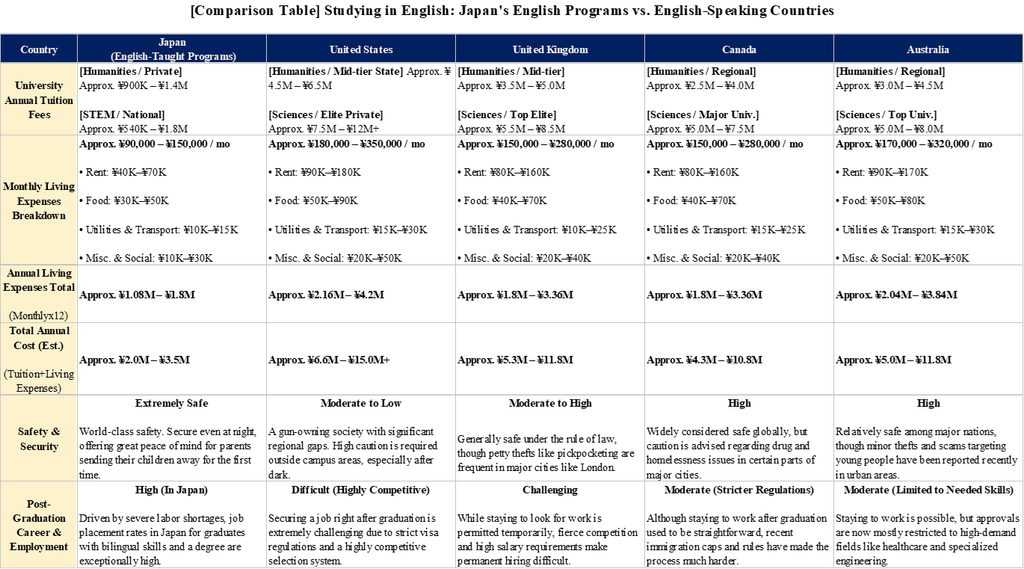
To help you make an informed decision, let’s compare Japan’s English-taught degree programs with major English-speaking study-abroad destinations across key factors: costs, safety, and career prospects.
Why Studying in English in Japan is a Smart Alternative
If you are weighing your options, here are the core advantages of choosing Japan as your study destination:
1. Favorable Cost Efficiency Compared to Western Nations
Studying in Western countries can easily range from ¥5 million to over ¥15 million per year when combining high international tuition and inflated living expenses. In contrast, English-taught programs at Japanese universities—ranging from affordable national universities to competitive private institutions—allow students to earn a respected degree for a total annual cost of roughly ¥2.0M to ¥3.5M. This financial advantage does not mean a compromise on academic quality, as Japanese higher education maintains high global standards.
2. Peace of Mind Through World-Class Safety
For students moving away from home for the first time—and for the parents supporting them—safety is a top priority. Japan consistently ranks among the safest countries in the world. Clean streets, a low crime rate, and reliable public transportation mean students can navigate campuses and cities day or night with profound peace of mind.
3. Strong Career Prospects in a Major Global Economy
While traditional English-speaking nations have tightened their immigration policies and made post-graduation local employment increasingly competitive, Japan faces a sustained labor shortage. International graduates equipped with an English-medium degree and cross-cultural adaptability find strong demand from global companies, multinational corporations, and forward-thinking domestic enterprises operating in Japan and across Asia.
Studying abroad doesn’t always have to mean crossing an ocean to an expensive Western metropolis. For ambitious students seeking a global education, complete English instruction, financial practicality, and a secure pathway to a bright career, Japan’s English-taught degree programs present one of the most reliable and rewarding paths available today.
Are you ready to explore which Japanese university fits your academic goals? Browse our program guides and stay tuned for our latest updates right here at Global University In Japan.
