
Based on a report by the Nikkei Shimbun (Published on October 12, 2026)
If you are planning to study in Japan, a major change is coming to the country’s universities. According to a recent report by the Nikkei Shimbun, the Japanese government and educational councils are working on a massive reform to shift how universities are evaluated, moving away from traditional entrance examination rankings and focusing on the actual quality of education.
1. What is Changing? (The Core Idea)
In the past, choosing a university in Japan often depended heavily on “Hensachi” (a Japanese ranking system based on entrance exam scores that measures test difficulty), university brand recognition, or location.
However, as reported by the Nikkei, the Ministry of Education, Culture, Sports, Science and Technology (MEXT) and the Central Council for Education plan to overhaul the third-party university evaluation system by fiscal year 2030.
Under the new system, instead of just looking at how hard it is to enter a university, the focus will shift to:
How much students grow after enrolling.
The actual quality of education provided by each individual faculty or department (rather than just the university as a whole).
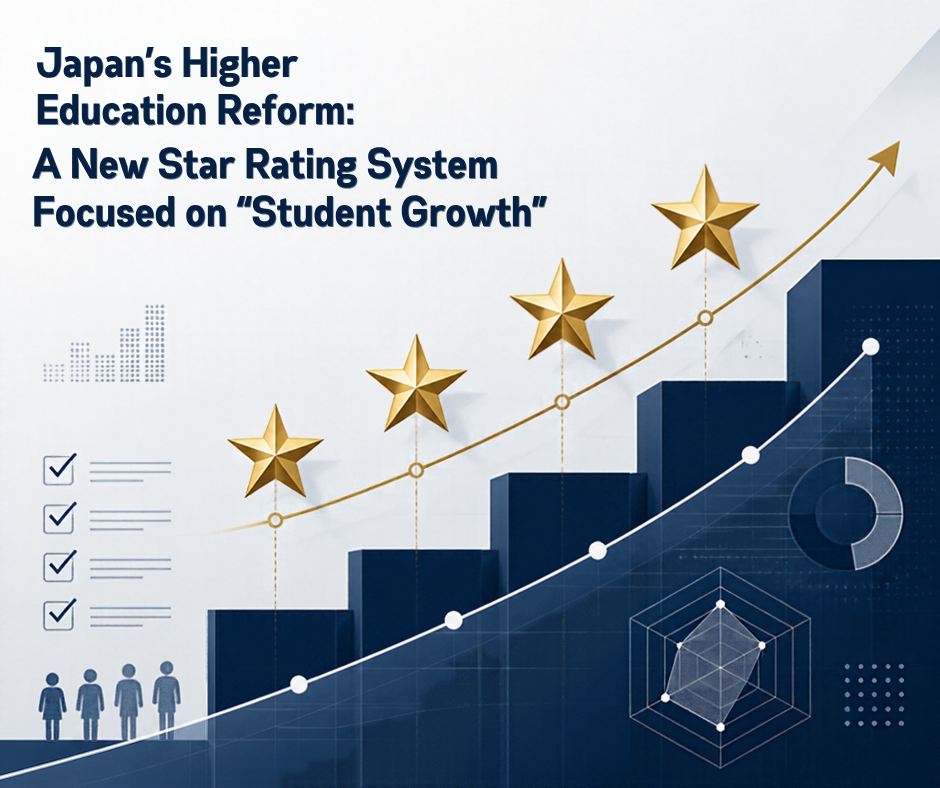
2. The New 4-Tier Star Rating System
To make university quality visible and easy to understand for everyone—including international students and parents—the government plans to introduce a 4-tier star rating system:
Up to 3 Stars (Three Stars): The highest evaluation level, indicating excellent educational quality.
Lower tiers down to “No Stars (Needs Correction)”: Faculties that do not meet expected standards will be required to make improvements.
This evaluation will not be based on personal opinions. Each university department’s Diploma Policy (DP)—the official standards required to graduate and earn a degree—will be strictly reviewed to ensure that students actually acquire the skills and knowledge promised.
3. What Does This Mean for International Students?
For students coming from abroad, this upcoming reform brings several clear benefits:
Easier to Find Quality Programs: Instead of relying on general brand names or difficult entrance exam scores, you will be able to look at objective “star ratings” for specific departments to find where the teaching quality is truly strong.
Focus on Real Skills, Not Just Entrance Exams: Japanese companies are increasingly expected to look at what students actually learned and achieved during their studies, rather than just which university’s entrance exam they passed. This encourages universities to focus on practical, high-quality teaching.
New Options in Regional Areas: Currently, many students concentrate heavily on universities in big cities like Tokyo. Under the new system, regional universities that provide exceptional education will receive proper recognition and public support, making studying in Japan’s vibrant regional areas an even more attractive choice.
Summary: A Shift Toward Student-Centered Education
As highlighted in the Nikkei Shimbun report, this reform is being called a “Great Reiwa-era Reform” by educational experts in Japan. The goal is to ensure that universities do not just accept students based on entrance exams, but actively support their academic growth and career preparation over their 4 to 6 years of study.
As Japan’s higher education system evolves to meet global standards, keeping an eye on these changes will help you make the best choice for your study abroad journey.
