
Quick summary
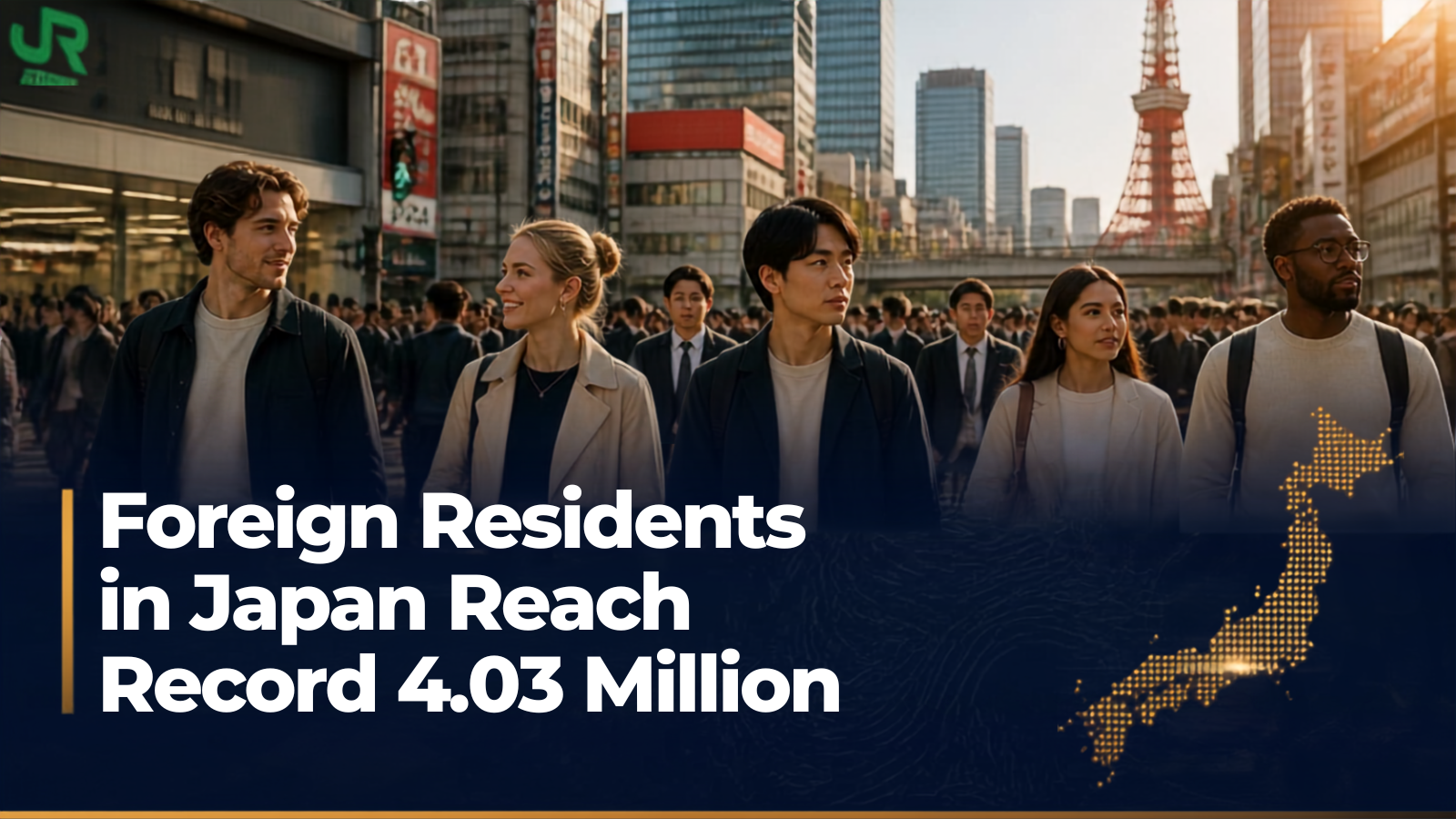
Japan’s official population register shows that the number of foreign residents living in Japan reached 4,031,159 as of January 1, 2026, up by roughly 350,000 from the previous year and the highest level on record. Foreign nationals now account for 3.3% of Japan’s total population of 123,767,642. With the native population declining for the 17th consecutive year, foreign residents are increasingly important as workers and community members.
Key statistics and trends
- Total foreign residents: 4,031,159 (record high).
- Share of total population: 3.3%, up 0.3 percentage points year‑on‑year.
- Net arrivals from abroad: 720,988, the largest since comparable records began in 2013.
- Departures abroad: 379,301.
- Tokyo: 783,702 foreign residents, an increase of 62,479; Tokyo accounts for 19.4% of all foreign residents.
- Fastest growth by rate: Hokkaido recorded a 14.9% increase to 75,392 foreign residents.
- Age profile: 86.2% of foreign residents are aged 15–64; the largest age group is 25–29 at 17.7%.
Regional highlights that matter to students
- Urban concentration: Tokyo remains the primary hub for international students and job seekers because of its many universities and industry connections. If you want access to internships and English‑friendly services, Tokyo is a strong option.
- New growth groups: Nepalese residents have surged in Tokyo, where municipal data show over 60,000 Nepalese as of April, making Nepal one of the top countries of origin. Local communities are responding with schools and support services tailored to new arrivals.
- Resort and regional demand: Ski resort towns and tourism areas in Hokkaido and other regions have seen large increases in foreign workers. Towns near major resorts now have foreign populations exceeding 20–30%, creating seasonal and year‑round job opportunities in hospitality and tourism.
- Local integration efforts: Municipalities and tourism organizations are producing multilingual guidance, running etiquette and traffic‑safety seminars for children, and organizing community cleanups to promote coexistence.
Policy changes and labor pathways
- New program from 2027: A “training‑to‑work” system will begin in 2027 to develop foreign workers as medium‑ to long‑term labor resources.
- Intake expansion: The foreign worker intake cap could rise from roughly 800,000 under the current specified‑skills system to about 1.23 million.
- Sectoral impact: Foreign workers are already essential in food service, labor‑intensive manufacturing, tourism, and other sectors facing chronic shortages.
What this means for international students
- More post‑study options: Expansion of work pathways and growing employer demand increase the chances of finding part‑time work during study and employment after graduation.
- Choose programs with clear outcomes: Prioritize universities that publish post‑graduation employment statistics and maintain industry partnerships. Programs that offer internships, career services, and alumni networks will help convert study into work opportunities.
- Local support is crucial: Look for institutions and municipalities that provide multilingual orientation, housing assistance, and practical guidance for daily life. These supports reduce friction when you arrive and improve your academic focus.
- Consider regional programs: Regional campuses and towns with high demand for hospitality and tourism staff can offer faster access to part‑time jobs and community integration, though Japanese language use may be higher outside major cities.
- Prepare now for 2027 changes: If your goal is to work in Japan, prepare transcripts, translations, language test scores, and a clear plan for internships or industry contacts before the new system launches.
Practical checklist for applicants
- Confirm degree language: Verify whether the program awards a full degree in English or only offers some English‑taught courses.
- Check admissions and visa pathways: Confirm application deadlines, required documents, and visa support for international students.
- Investigate career services: Ask about internship placement rates, employer partnerships, and alumni outcomes.
- Assess local living conditions: Research housing, transport, and community services in the city or town where you’ll study.
- Plan finances: Look into scholarships, part‑time work rules, and living‑cost estimates for your chosen location.
(Source: Nikkei, July 29, 2026)
Global University in Japan view:
The rising foreign resident population and the planned expansion of work pathways create a favorable environment for international students who want both a degree and a pathway to employment in Japan. However, policy changes are often rolled out gradually and piloted locally, so treat announcements as opportunities to prepare rather than guarantees.
Final recommendation: Use this moment to position yourself as a candidate who can contribute academically and socially. Early preparation, a diversified application strategy, and careful selection of programs with strong career pathways will maximize your chances of studying and building a career in Japan.
