
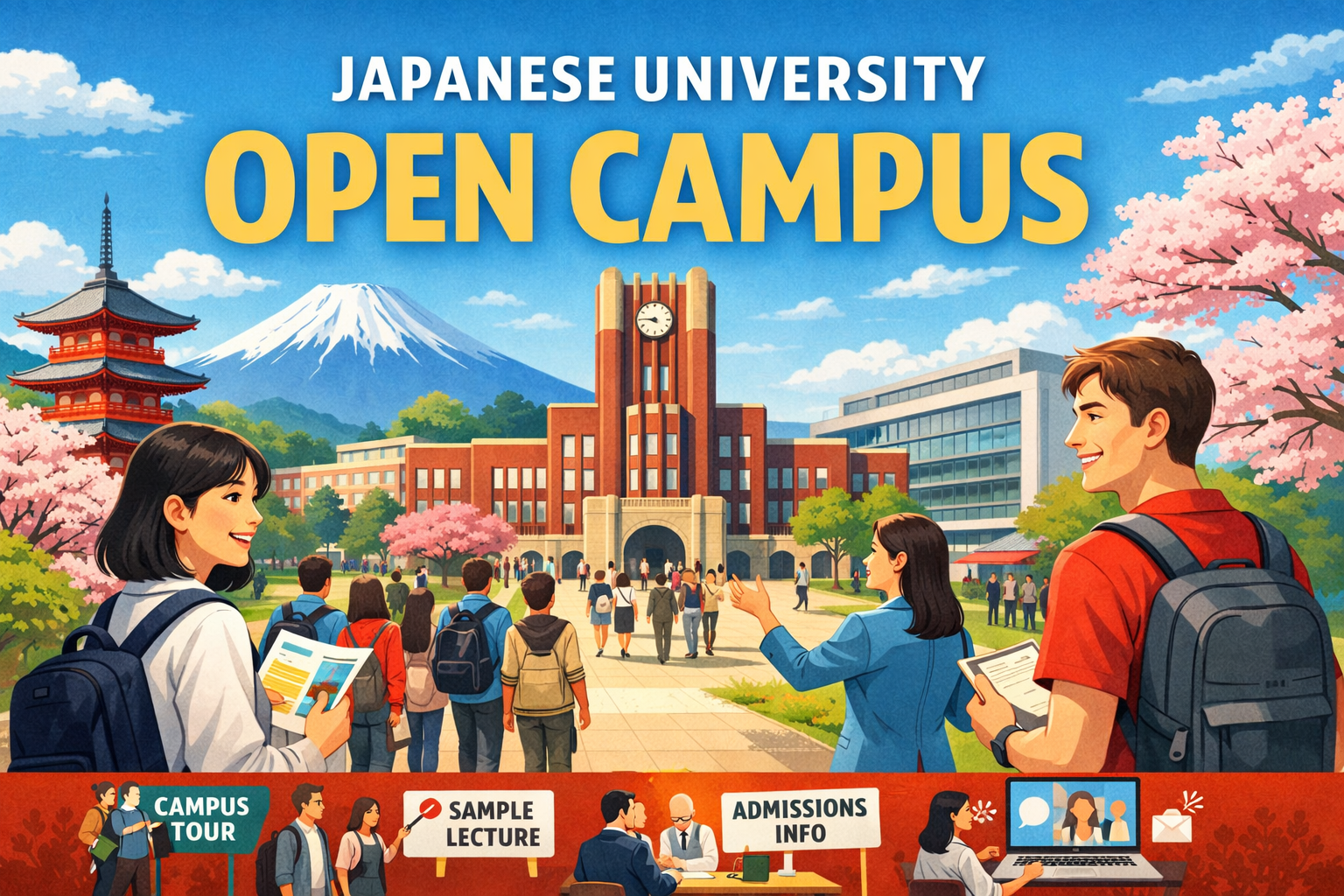
In Japan, universities organize Open Campus events to provide prospective students with an opportunity to experience academic and campus life before applying. These events are comparable to college open houses in the United States, but they are often more structured and closely tied to the admissions process. This article introduces an overview of the open campus and highlights key points to check during individual consultations.
Timing
・Summer sessions (July–August) are the primary period, coinciding with Japanese high school summer vacation.
・Spring sessions (April–June) and Fall sessions are supplementary, offering additional opportunities for students who cannot attend in summer.
Activities
During an Open Campus, students may:
・Attend sample lectures to experience teaching methods.
・Tour facilities such as libraries, laboratories, and dormitories.
・Receive admissions guidance including entrance exam explanations and scholarship information.
・Interact with current students to learn about daily life and study culture.
International Student Participation
For students already residing in Japan, attending in person is straightforward. However, for those currently abroad—such as students in the United States—many universities provide online open campus programs.
These typically include:
・Live-streamed lectures and campus tours with English interpretation or subtitles.
・Recorded sessions accessible on demand.
・Virtual consultation booths for international admissions, scholarships, and student support services.
Key points to check
During my time working as an admissions office staff member at a university, I often received questions and confirmation requests from international applicants. Below, I introduce the most common inquiries and points they raised.
Admissions requirements
Verify entrance exam formats, application deadlines, required documents, and whether English-based programs are available.
Scholarships and financial aid
Ask about scholarships specifically for international students, eligibility criteria, and application procedures.
Duration of scholarship
The length of time the scholarship is awarded (e.g., one year, until graduation, or renewable annually).
Scholarship amount
The financial support provided, which may cover tuition fees, living expenses, or both.
Continuation criteria
The academic or performance standards required to maintain the scholarship, such as minimum GPA, satisfactory progress, or participation in designated activities.
Language of instruction
Confirm whether courses are taught in Japanese, English, or both, and check if language proficiency tests (JLPT, TOEFL, IELTS) are required.
Academic programs
Review curriculum details, research opportunities, and exchange programs.
Campus facilities/Campus location
Tour libraries, laboratories, dormitories, and international student centers to understand available resources.Confirm whether students remain on the same campus throughout their undergraduate program or if they need to transfer to another campus after the initial years.
Student life
Learn about clubs, cultural activities, and support networks for international students.
Support services
Confirm the availability of language support, counseling, career guidance, and international student offices.
Visa and residence support
Ask about assistance with visa applications, residence permits, and housing arrangements.
Online participation options
For students currently abroad, check if live-streamed lectures, recorded sessions, or virtual consultations are available.
Differences from other universities
*Even outside of Open Campus events, many universities also offer online individual consultation sessions. Therefore, if you are interested in a particular university, you are encouraged to actively send an email inquiry.
